
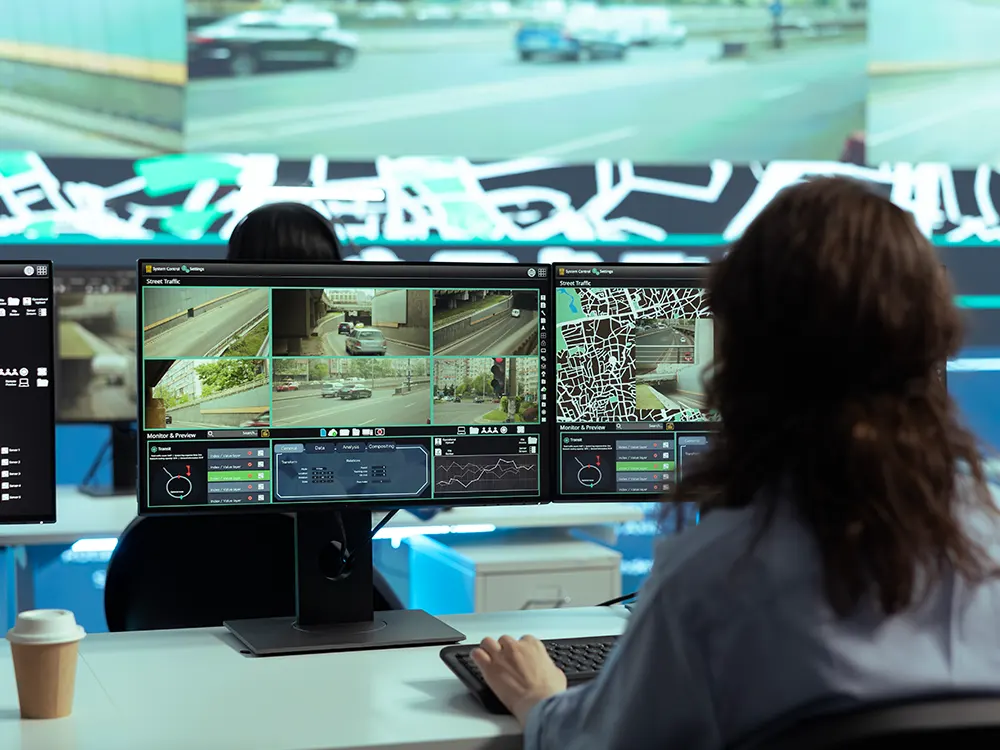
Security cameras do not just record illegal activity after it happens. They actively alter criminal behaviour before an offence occurs. High-visibility camera setups deliver immediate visual crime deterrence across any property. Visible security cameras stop burglars by increasing their risk of swift identification. Offenders consistently avoid sites with active surveillance coverage.
This guide explains how CCTV prevents crime across residential, commercial, and industrial properties. Professional CCTV services combine continuous monitoring with swift emergency responses. High-definition footage provides definitive evidence to support police investigations and secure criminal convictions.
The Psychology of Target Hardening & Visual Deterrence
Target hardening security alters an environment to make physical intrusion significantly harder. Most property offenders operate as opportunistic actors. They calculate immediate risks against potential rewards before attempting a break-in. Visible security cameras transform a vulnerable location into a hard target. This physical barrier creates the psychological deterrence CCTV systems rely on. Offenders abandon monitored properties instantly and search for unmonitored targets.
How CCTV Prevents Crime Across Different Sectors
Different sectors face distinct criminal threats daily. Commercial sites battle inventory theft while residential areas face opportunistic burglary. Effective CCTV crime prevention requires strategic camera placement tailored to specific risks. Tailored surveillance strategies successfully prevent crime across different properties.
Residential Homes & Luxury Estates
The residential sector faces severe threats including home invasions and perimeter wall breaches. Residential crime deterrence relies on multi-layered perimeter surveillance. Visible boundary cameras prevent home invasions by spotting intruders before entry. Specialised lens positioning helps prevent driveway hijackings by monitoring access gates. Early-warning AI detection delivers instant alerts upon identifying unauthorised perimeter movement.
Apartment Blocks & Sectional Titles
Multi-family housing developments require focused coverage across apartment estate sectors. Apartment security cameras stop pedestrian tailgating at primary entrance gates. Advanced setups help prevent car theft; CCTV systems monitor shared parking garages continuously. Visible lens placement deters property vandalism inside elevators and communal stairwells.
Commercial Offices & Businesses
Corporate security cameras deliver effective office break-in prevention across the commercial sector. Strategically positioned cameras stop after-hours theft of expensive computers and office equipment. Monitored entry points block unauthorised access to sensitive server rooms. High-resolution video systems secure critical corporate assets continuously.
Retail Stores & Shopping Centres
High-density surveillance protects commercial businesses across the retail sector. Store managers stop shoplifting with cameras placed along high-risk aisles. Over-till monitoring deters armed robberies by recording cash transactions clearly. Dedicated stockroom cameras stop internal staff shrinkage by tracking inventory movement. Strategic installations prevent retail theft; CCTV cameras continuously secure public exit points.
Warehouses & Industrial Sites
Industrial security cameras protect essential supply chains across the warehouse logistics sector. Continuous yard monitoring stops copper cable theft before it causes expensive infrastructure damage. High-definition cameras disrupt logistics syndicates by tracking all cargo movement across loading bays. Automatic number plate recognition blocks unauthorised vehicles from breaching perimeter gates. Tailored perimeter surveillance delivers effective warehouse crime prevention day and night.
Vulnerable Areas That Require Camera Coverage
Visual deterrence fails when blind spots exist across vulnerable security areas. Optimal CCTV camera placement guarantees complete coverage of primary intrusion points. Criminals systematically target unmonitored rear entry doors, dark alleyways, and hidden perimeter fences. A professional security system consultation identifies these exact breach locations before installation. Correctly positioned cameras eliminate visual gaps and stop trespassers immediately.
Entrances, Exit Points & Driveway Gates
Driveway security cameras protect primary entry points against organised criminal syndicates. Visible lenses prevent gate motor theft by recording suspicious access attempt details. Targeted coverage stops syndicates from tracking resident vehicle movements and arrival times. Integrating cameras with intercom door entry systems ensures total access verification at property boundaries.
Blind Spots & Low-Visibility Boundaries
Dark alleyways and unlit boundary walls present extreme physical security risks. Criminals exploit security blind spots to conceal themselves before launching a break-in. Proper perimeter breach CCTV eliminates low-visibility areas along exterior walls. Experienced technicians understand how to install security system components to eliminate shadows entirely.
The Forensic Value: From Recording to Conviction
High-definition CCTV systems capture critical video proof when initial deterrence fails. Investigating officers use forensic CCTV evidence to identify suspects and track movement. Clear visual logs document key event details, including exact dates and times. Timestamped footage assists prosecutors in building undeniable court cases against offenders. Reliable recorded footage can help secure swift convictions based on security camera evidence.
High-Definition Evidence for SAPS
SAPS officers require crisp facial features and clear licence plates to execute arrests. Blurry video recordings fail during official criminal investigations. High-definition 4K resolution and ColorVu night vision capture precise visual details. These features produce actionable security camera footage police use to locate suspects. To submit unambiguous CCTV evidence that SAPS accepts, you need high-end optical sensors. Installing the best CCTV equipment guarantees court-admissible forensic evidence.
The Honest Limitations: When Cameras Aren’t Enough
Surveillance cameras operate as passive observation tools rather than physical barriers. They cannot physically stop an intruder from breaking a door. Acknowledging the limitations of CCTV ensures realistic protection planning. Unattended video surveillance weaknesses occur if property owners rely solely on recording devices. A robust security system pairs visual monitoring with physical barriers and active alarm response.
Why CCTV Must Be Paired With Active Alarms
Layered security systems combine visual monitoring with physical intervention. Cameras record activity and deter initial trespassers effectively. An active alarm system triggers immediate sirens during an intrusion attempt. Armed response units secure the premises when sensors detect boundary breaches. Integrating CCTV and alarms guarantees rapid property protection during emergencies.
FAQs
Do security cameras actually deter crime?
Visible security cameras actively deter crime by increasing the risk of immediate identification. Most offenders deliberately avoid properties with active surveillance systems. Visible lenses force criminals to abandon targeted sites for unmonitored locations.
Can CCTV stop home break-ins?
Yes, CCTV systems significantly reduce home break-ins through visual deterrence. Visible cameras make properties harder targets by increasing identification risk. Most burglars deliberately avoid monitored homes and instead look for unmonitored locations.
Can CCTV prevent shoplifting?
Yes, strategic CCTV coverage directly prevents shoplifting in retail stores. Visible camera placement deters opportunistic thieves from stealing merchandise. Continuous video recording increases the likelihood of immediate theft detection.
Can CCTV stop gate motor theft?
Yes, targeted CCTV coverage deters gate motor theft effectively. Visible cameras increase the risk of swift identification for criminal syndicates. Early video detection stops thieves before they tamper with gate motors.
Can police use my CCTV footage to catch a burglar?
Yes, police actively use high-definition CCTV footage to identify and locate burglars. Clear video captures critical details, including facial features, clothing, and exact timestamps.
Can a security camera trigger an alarm?
Yes, modern security cameras can directly trigger an active alarm system. Smart analytics send real-time signals to sirens or monitoring centres upon detecting unauthorised movement.
How do I book a security assessment?
You can book a security assessment by contacting an accredited installer online or via phone. Technicians inspect your property to locate vulnerable entry points and blind spots.